

Published on: 05/08/2025
In 2017 the Archbishops’ Council released a report called ‘Setting God’s People Free’ and the following is an excerpt from the Introduction of that report:
“This report identifies the need for two shifts in culture and practice that we see as critical to the flourishing of the Church and the evangelisation of the nation.
1. Until, together, ordained and lay, we form and equip lay people to follow Jesus confidently in every sphere of life in ways that demonstrate the Gospel we will never set God’s people free to evangelise the nation.
2. Until laity and clergy are convinced, based on their baptismal mutuality, that they are equal in worth and status, complementary in gifting and vocation, mutually accountable in discipleship, and equal partners in mission, we will never form Christian communities that can evangelise the nation.”
This first point provides some of the inspiration for our Lights for Christ initiative in the Diocese, and the second point goes somewhat towards describing why I do what I do in my role here.
For around a month now I have been the Lead Lay Ministries Enabler, which means I continue to look after Focal Ministry as the Warden of Focal Ministers, and I have also picked up oversight of wider lay ministry in the Diocese, including Reader Ministry.
‘Baptismal mutuality’ means that everyone who is baptised has received the light of Christ, and then gets to go on an adventure of following Him and reflecting that light in different ways. Some are called to be ordained as clergy, others to remain as lay, but all are needed to partner with God in His mission in this nation.
As the points above state, we need all the baptised, the whole people of God, to play their part and bring their gift as part of the body of Christ – every part of the body is required to form Christian communities which reach out in evangelism and mission.
In Sheffield Diocese we have three different pathways for Lay Ministry – Licensed, Authorised, and Locally Commissioned.
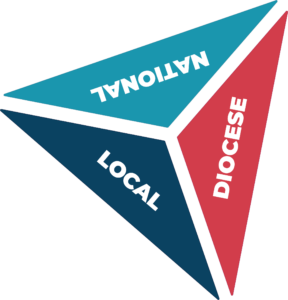
Licensed roles include Lay Readers and Church Army Evangelists, and people with these vocations have been through a discernment process and undertaken some nationally recognised training. They hold the Bishop’s License.
Authorised roles include Children, Youth and Family Workers, Focal Ministers, Parish Evangelists, Spiritual Accompaniers and some worship leaders and pastoral workers.
Commissioned Lay Ministers (CLMs) are locally identified, locally trained and locally commissioned – and could specialise in any area of church life and mission.
Focal Ministry features in the Diocesan strategy as it seeks to raise up lay leaders of churches and new worshipping communities. Focal Ministers can be a rooted, embedded, regular and visible leadership presence in a church, and they are also tasked with identifying gifts in others and releasing all lay people to play their part in ministry and mission within a church.
I would love to hear from you if you want to explore Focal Ministry in your church, or if you’d like info on other lay pathways in the Diocese. Look out for a Lay Pathways workshop at Development Day in October, it would be great to see you there!
This week’s Blog post was written by Beth Burras, Lead Lay Ministry Enabler