

Published on: 24/11/2026
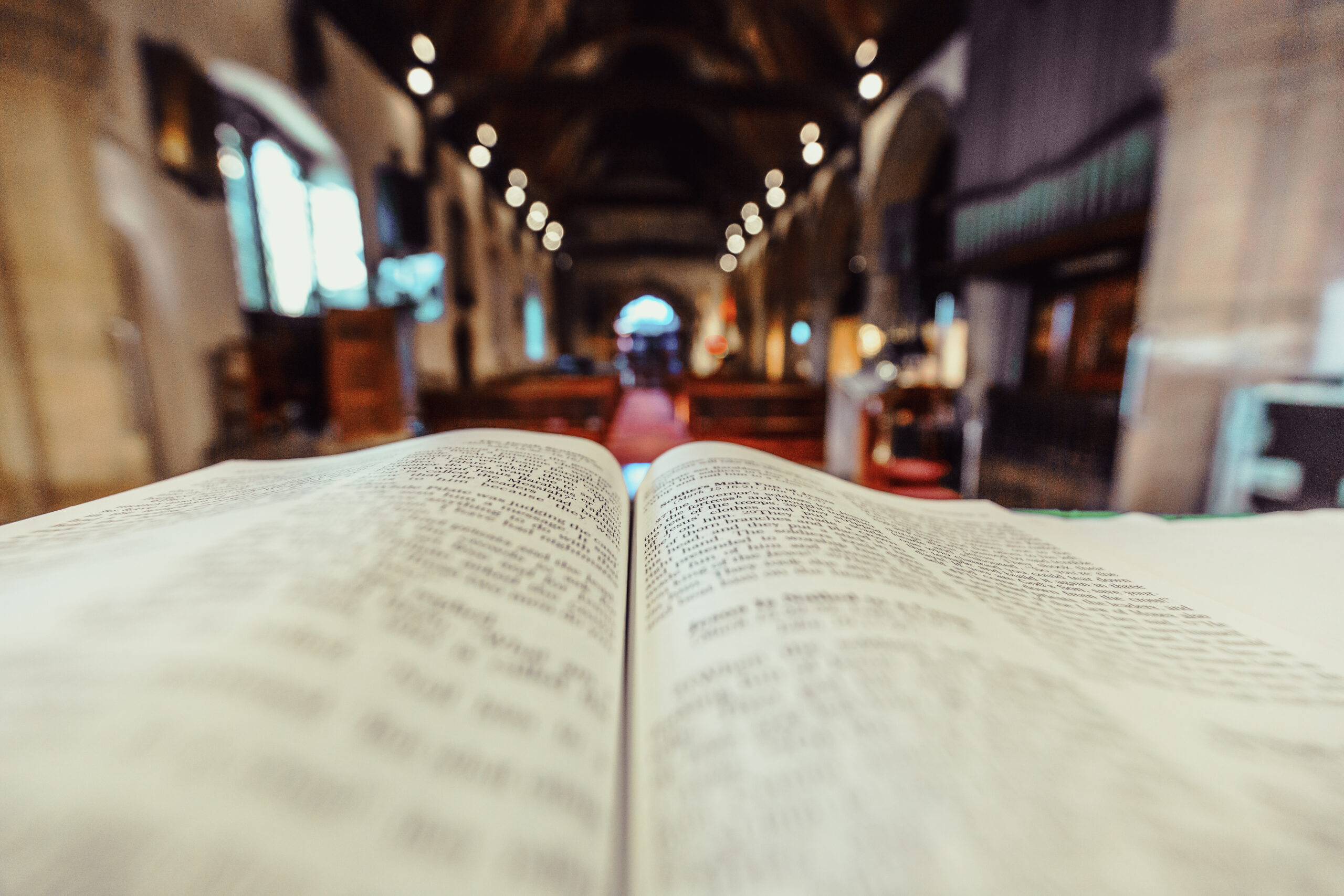
There’s a fair chance that in your Bible, between the end of Malachi and the beginning of Matthew, there is a single blank page. That page serves as the dividing line between the Old Testament and the New; between one spiritual reality and the next; between the prophet Malachi and John the Baptist, whose story we’ll hear again this Advent season. Malachi is believed to have been writing in the fifth century BC, so between his time and John the Baptist’s there were four centuries of silence, where no prophecy was recorded. Israel lived under the occupation of the Persian, Greek and Roman empires as they waited for the Day of the Lord which Malachi and the other prophets had promised. Perhaps you can relate to that sense of waiting for God to do His work.
It’s the start of a new year; but don’t worry, you didn’t sleep through Christmas! The Anglican liturgical year begins on the first day of Advent, which this year falls on the coming Sunday, 29th of November. The Advent season is the first season of the Anglican calendar, reminding us of the spiritual experience of waiting for breakthrough and change. In a month of long nights, short days and cold mornings, the world grows quieter as we, like ancient Israel in those four hundred years, wait for the coming of Jesus.
Why does the Christian journey through the year begin with a period of waiting?
There’s a frustration behind this question, as we are often tempted to view times of waiting as dead or empty seasons. This is especially the case when we define ourselves in terms of our activity alone, when we view ourselves as machines instead of people.
However, wise voices will tell us that time spent waiting is not time wasted, because waiting is a formative experience. It is when we wait for someone that we experience and become keenly aware of the lack of their presence, an awareness that only causes us to grow in longing for them. The things for which we are most grateful, like the first radiant caress of Spring sunshine or the birth of a child, are those that came after a long wait.
Richard Foster is one such wise voice who experienced transformation in a time of waiting;
“Stillness is a close cousin to waiting. Remember the wisdom of God through the psalmist, “Be still, and know that I am God!” (Ps. 46:10). It is indeed so. As we wait in stillness we are given a greater capacity to discern the kol Yahweh, the voice of God, in his wondrous, terrible, loving, all-embracing silence.”
“As we learn to wait and to work in a posture of stillness we are being changed. We begin living in the steady peace of God, a peace that goes down to the very depths of our soul. We begin experiencing an unhurried conquest; an inward conquest over ourselves, and an outward conquest over the world. We grow less and less impressed by the religion of the “big deal,” and instead find joy in simple acts of goodness.”
Waiting in frustration, impatience and distraction mean that, when we finally come to the moment we’ve been waiting for, we will greet it with a grunted “At long last!”, as opposed to a joyful “Thank God!” Learning to wait well is part of what it means to be a disciple; if we wait intentionally, prayerfully and with a heart of peace, we will be formed into people who are more like our Saviour.
So, happy new year! My resolution is to allow myself to feel the complicated emotions associated with waiting – longing, gratitude, disappointment, trust and hope – as I sit on train station platforms or queue for the tills at ALDI. Likewise, may your times of waiting be times which renew, restore and transform you, and may you know the presence of the Lord, even as you wait for his coming.
If you’d like to speak to the Lights for Christ team about spiritual formation, intentional and fruitful living, or discipleship culture in your church or community, we’d love to hear from you through our email: lightsforchrist@sheffield.anglican.org.
This week’s blog post has been written by Joe Goodchild, Assistant Lights for Christ Enabler.