
Published on: 01/09/2025
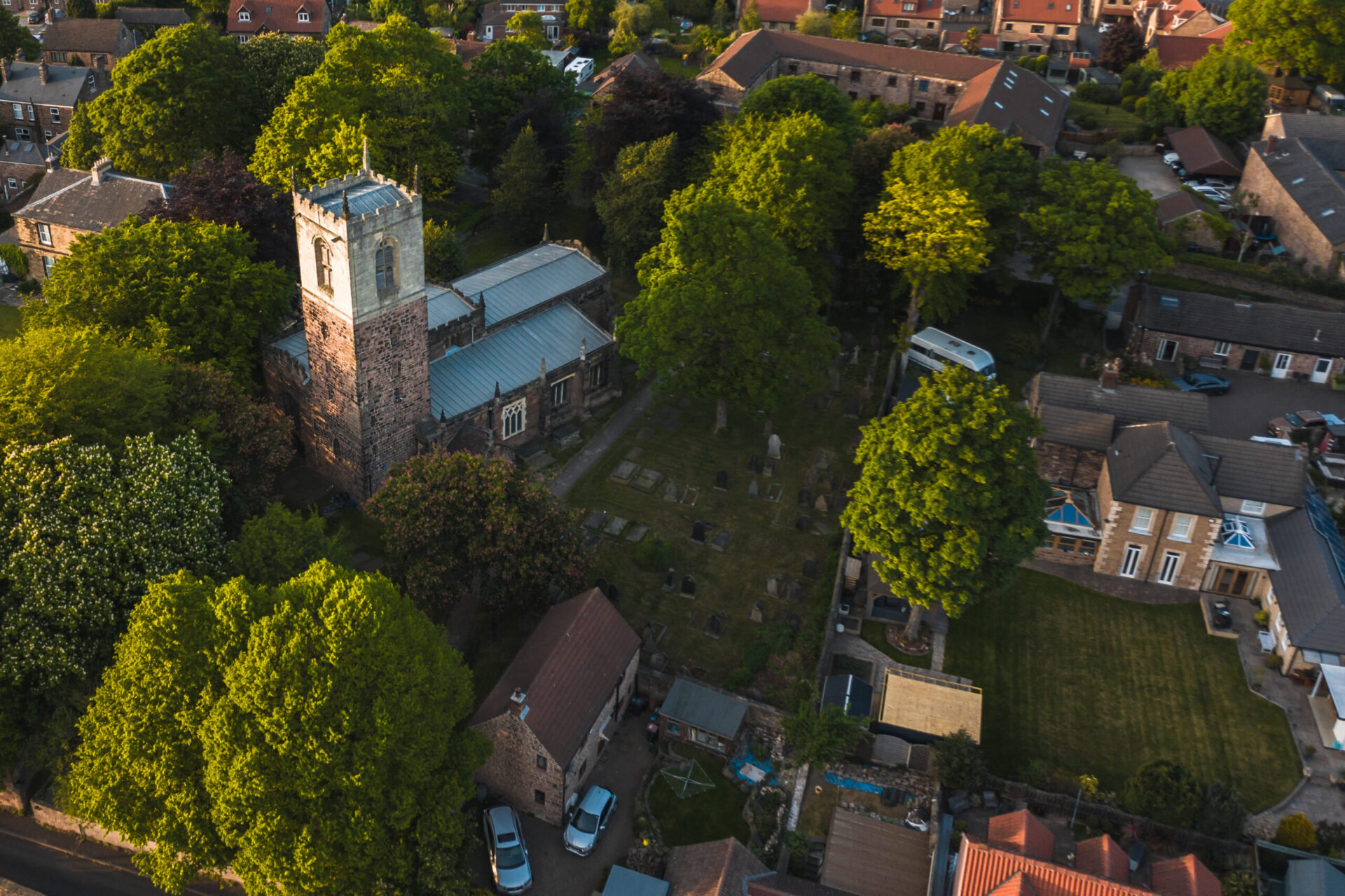
The Marshland Benefice in the Diocese of Sheffield is celebrating the life of the Revd Edward Cragg Haynes, a pioneer vicar believed to be the first black vicar in Yorkshire, and possibly England.
Edward, who became the vicar of St. Margaret’s Church in Swinefleet in 1872, will be remembered during several events on the weekend of Friday 19 September until Sunday 21 September. The celebrations will involve local primary schools, the four churches in the Marshland Benefice and the Bishop of Sheffield, the Rt Revd Dr Pete Wilcox. Revd Edward Cragg Haynes is believed to be the first black graduate of Trinity College, Cambridge and the first black vicar in Yorkshire and possibly in England.
On Friday 19 September at 2pm, students from local schools will gather at St. Bartholomew’s Church, Eastoft for a service of celebration led by Revd Huw Thomas, the Diocesan Director of Education.
On Saturday 20 September between 12pm and 4pm, the four churches in the Marshlands Benefice will be open to the public. Artwork created by local students will be on display at Eastoft, Swinefleet and Whitgift churches.
On Sunday 21 September, Bishop Pete will visit each of the four Marshland churches meeting with local congregations and communities. He will visit St. Bartholomew’s, Eastoft from 1.15pm till 1.45pm, All Saints, Adlingfleet from 2.00pm till 2.30pm and St Mary Magdalene, Whitgift from 2.45pm to 3.15pm. Bishop Pete will then lead a Benefice Service at St. Margaret’s, Swinefleet at 4.00pm.
Carolyne Storey, Focal Minister at the Marshlands Benefice, said:
‘As Focal Ministers, Ian (Bishop) and I felt this man was inspirational, strong in faith, putting others first, especially with the education of young people. It is fitting that we celebrate the achievements of Rev Cragg Haynes, especially in the times we are in. Fundamentally it is a way to bring community, schools and church together.’
History of Rev. Edward Cragg Haynes
The Rev. Edward Cragg Haynes was probably born on the 14th May 1821 in Bridgetown, Barbados to William Cragg Haynes and Sarah Catherine Blackman who were classified as a Free Coloured Man (FCM) and a Free Coloured Woman (FCW).
His grandfather was Richard Cragg Haynes (1765-1820) a free ‘mulatto’, that is, he had Black and white parentage. It is believed Richard’s parents were William Cragg, a freed black slave and Mary Haynes a woman of white descent.
Freedmen were classed as British subjects and Edward’s father William became a wealthy plantation and commercial property owner through the inherited wealth of his wife Sarah.
Edward was sent to England to be educated and he entered Kings College in London in 1839 at the age of eighteen.
Edward registered with the Inns of Court of Middle Temple in 1842 probably intending to undertake a legal career but he seems to have changed course and was admitted to Trinity College, Cambridge on 19 June 1844 as a fee-paying student. He attained a BA on 6 June 1848 which included a course in divinity and became the first black graduate of Cambridge University.
Edward undertook religious education at Southwark Cathedral before being ordained as a deacon in 1849. He then served as a deacon at Drayton Beauchamp near Tring and was ordained as a priest by Samuel Wilberforce, the son of William Wilberforce at Cuddesdon in Oxford. During this time Edward inherited £15,500 which would allow him to acquire a post in another parish.
It is believed that Edward learned of the Marshland parish of Swinefleet through Lady Anne Ross of Aston Abbotts whose family, the Coulman’s lived at Whitgift Hall in the Marshlands.
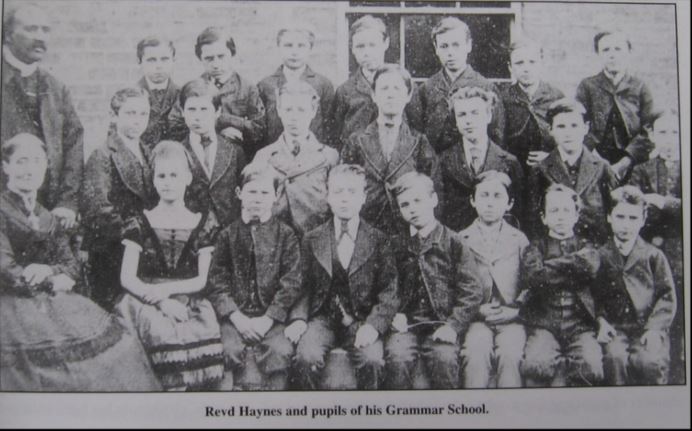
Edward became curate of St. Margaret’s on the 19 December 1851. He established Swinefleet Grammar School where he educated local boys as both boarders and day pupils.
He married Henrietta Fowler, the daughter of a solicitor from Gainsborough on the 28 June 1855. They had a son Edmund, born 21 April 1863 but who died at the age of thirteen on 13 January 1877.
Edward used the money he made from his inheritance and the fees from the school to purchase land in Old Goole from the Empson family. He then built a new school Empson Villas again for day pupils and boarders. The wealthy families in the region sent their sons to be educated at this school. Pupils included Joseph Rank from Hull who went on to form the Rank flour mills and whose son was J. Arthur Rank of the famous cinema Rank Organisation.
Edward became vicar of St. Margaret’s in 1872 becoming the first black vicar in Yorkshire and possibly within England. Edward used some of his wealth to restore the dilapidated church building and to build a new vicarage. During the construction of the Vicarage, Edward & Henrietta lived at Empsons Villa which was known locally as the ‘Black Vicarage’.
Edward died suddenly on the 20 September 1883 and his estate passed to his wife.
He is buried in the churchyard at St. Margaret’s, Swinefleet alongside his wife and son.
Reference material
Glossary
Coloured: an offensive/unacceptable term. This was a colonial term used to emphasise difference and unequal status. It is often still used by people who mistakenly believe it is ‘less harsh’ than the term ‘Black’. It also has links with the apartheid system in South Africa, in relation to people of mixed heritage.
People of Colour: This is primarily used in the USA and has not been fully adopted within the UK although it has become more popular. Some perceive it as a more positive term than ‘BAME’ or ‘BME’. However, others see it as similarly problematic, in that it groups together people of great ethnic diversity and different shared experiences and identities.
Mixed race: currently the term preferred by most people of mixed parentage, whilst others/although some prefer to be identified by their parents’ nationality, e.g. Anglo-Nigerian. Some people object to these terms, preferring mixed heritage. It is useful to listen to how people describe themselves and use that terminology with them.
Black: a term that has been, and still is, used to describe some or all the people of African, Caribbean, South Asian and other Asian origin, and often also to describe people of mixed heritage
A more comprehensive glossary of terms can be found here: Racial Justice Glossary of Terms