
Published on: 11/03/2026
A piece of music which had nearly been lost to time is going to be performed in Aston later this month.
The Lenten Cantata ‘Cross of Christ’ by Victorian composer Thomas Adams (1857-1918), who was Organist and Director of Music at St Alban’s Holborn, had fallen out of publication and no evidence of it having ever been performed exists. Director of Music at All Saints Elliott Walker took up the challenge of reproducing it for the 21st century.
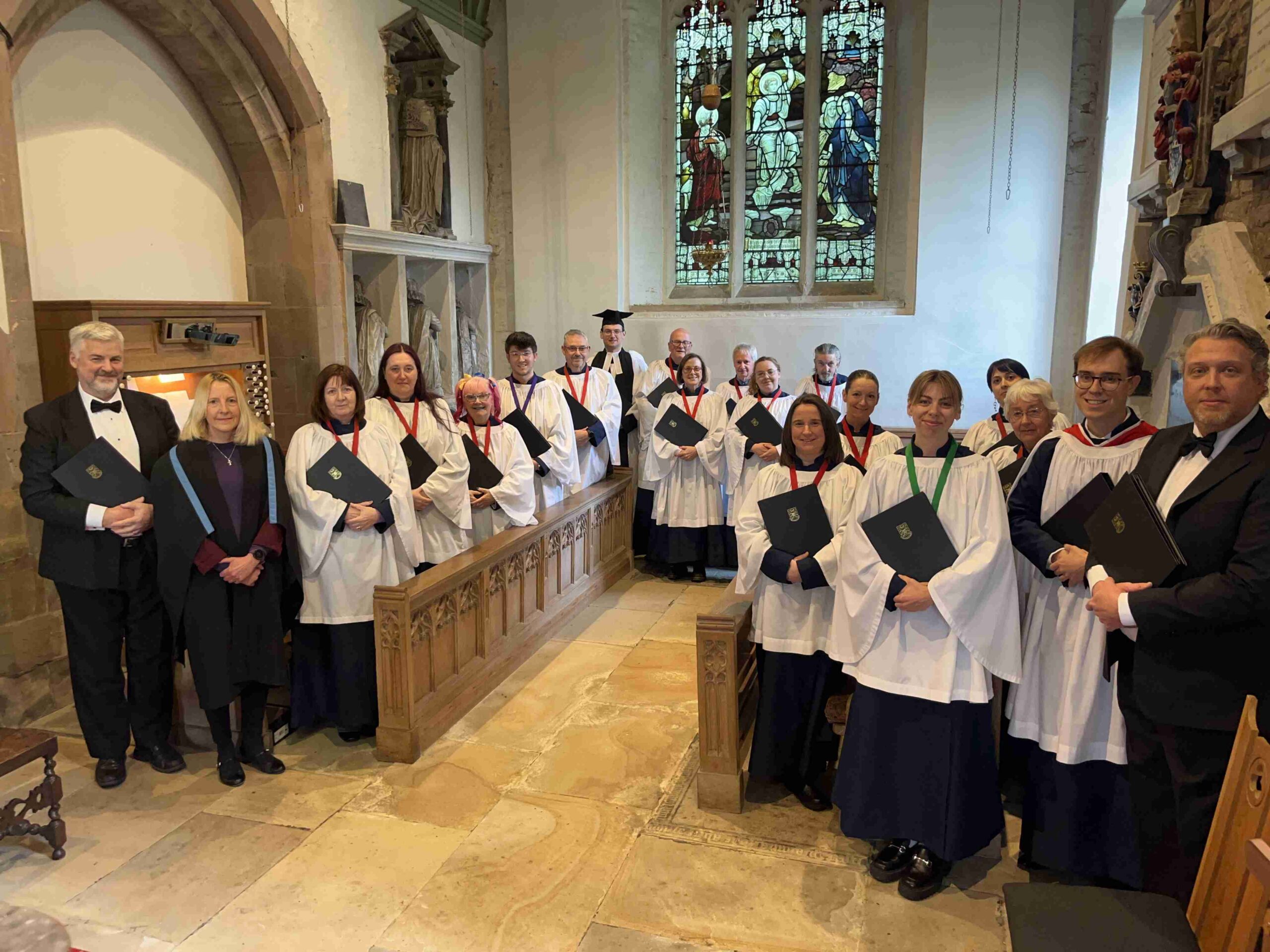
All Saints has a strong choral tradition dating back hundreds of years, and each year they attempt a Lenten performance of an oratorio or cantata. Last year’s choice was John Stainer’s ‘Crucifixion’, telling the story of Christ’s crucifixion and the leadup to it. This year, Elliott and the choir looked to do something different, focusing on the themes of love and discipleship as part of worship alongside the singing.
‘The Cross of Christ’, composed in 1897, was a fun challenge for the Aston choir to attempt, as Elliott explains:
‘I really like doing obscure music because it’s really fun. It’s hard, but it’s a fun challenge and I like being able to bring something back out of its original context. I did quite a bit of digging and I looked around to see what I could do and found this piece; there’s no evidence of this piece being performed and we have no copies of it in publication.
‘I had to factor in a lot of practical elements, such as how long was needed to rehearse it and whether it’s workable.’
The cantata will be performed at All Saints Aston on Sunday 22 March at 6pm as an act of worship during the evening service, with a collection taken at the end to help support the music work of the church. The choice of singing this music as part of the service, rather than as an individual concert, is part of the choir’s commitment to provide a high standard of music for worship.

Hearing the music performed, perhaps for the very first time, is a moment that will be special, says Elliott:
‘I think there’s something so magical about hearing the choir sing it for the first time. This could be the first time those notes have been put together like that in a church for so long, which I think is the magic of our rich church musical tradition.
‘It’s great we can take these things out of the archive, reinvent them and bring them into the 21st century. I think it is an exceptional privilege that, as musicians, we are not only artistic creatives but also custodians and historians of the rich tradition of church music. On a weekly basis, we carry the responsibility of reinventing the archaic, returning to familiar repertoire, and exploring the modern expressions of the genre.
‘We have this precious window of opportunity to delve into the archives, to rediscover music that once served its purpose in the Victorian period, and to reimagine it in a 21st-century context – something I am sure the original composer could never have envisaged.’
